August 16, 2022
Story by Sam Marshall
Photos by Maxwell Roelfsema of Miles Action Photography
The opportunity to hunt in the Alaskan wilderness had consumed my mind and thoughts ever since I visited Alaska for the first time in the summer of 2021. I knew that I had no choice but to go back. Fortunately, I had convinced a good friend of mine, Max, not only to travel with me to Alaska for the summer of 2022 but also to join me on a caribou hunt during our last week before heading back home to Minnesota. We spent the summer months peaking mountains in the Chugach Mountain Range, salmon fishing the Kenai River and Russian River, halibut fishing out of Seward, and planning our final adventure. About four days priors to leaving for our hunt, I could sense a bit of hesitancy about the entire idea in Max's voice. We had been excitedly planning this hunt for months on end, and something had changed in the tone of his voice. "What's on your mind? Are you nervous or what's going on?", I asked. Max responded, "Sam - Neither of us have ever hunted anything outside of Minnesota, we're going to be in grizzly bear country, we've never quartered an animal, we'll be miles away from any gas station, grocery stores, and we'll have no cell service if something goes wrong. Shall I go on? Yeah, I'm a little nervous." Just days before we packed up all our belongings to embark on our final adventure, reality had hit us square in the face - we had no idea what we were getting into.
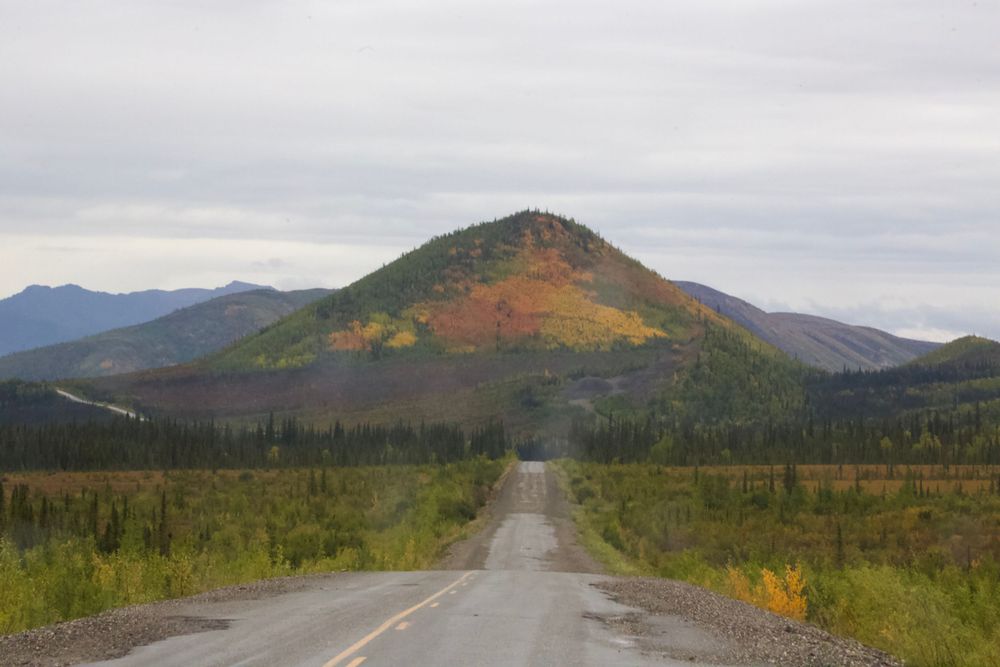
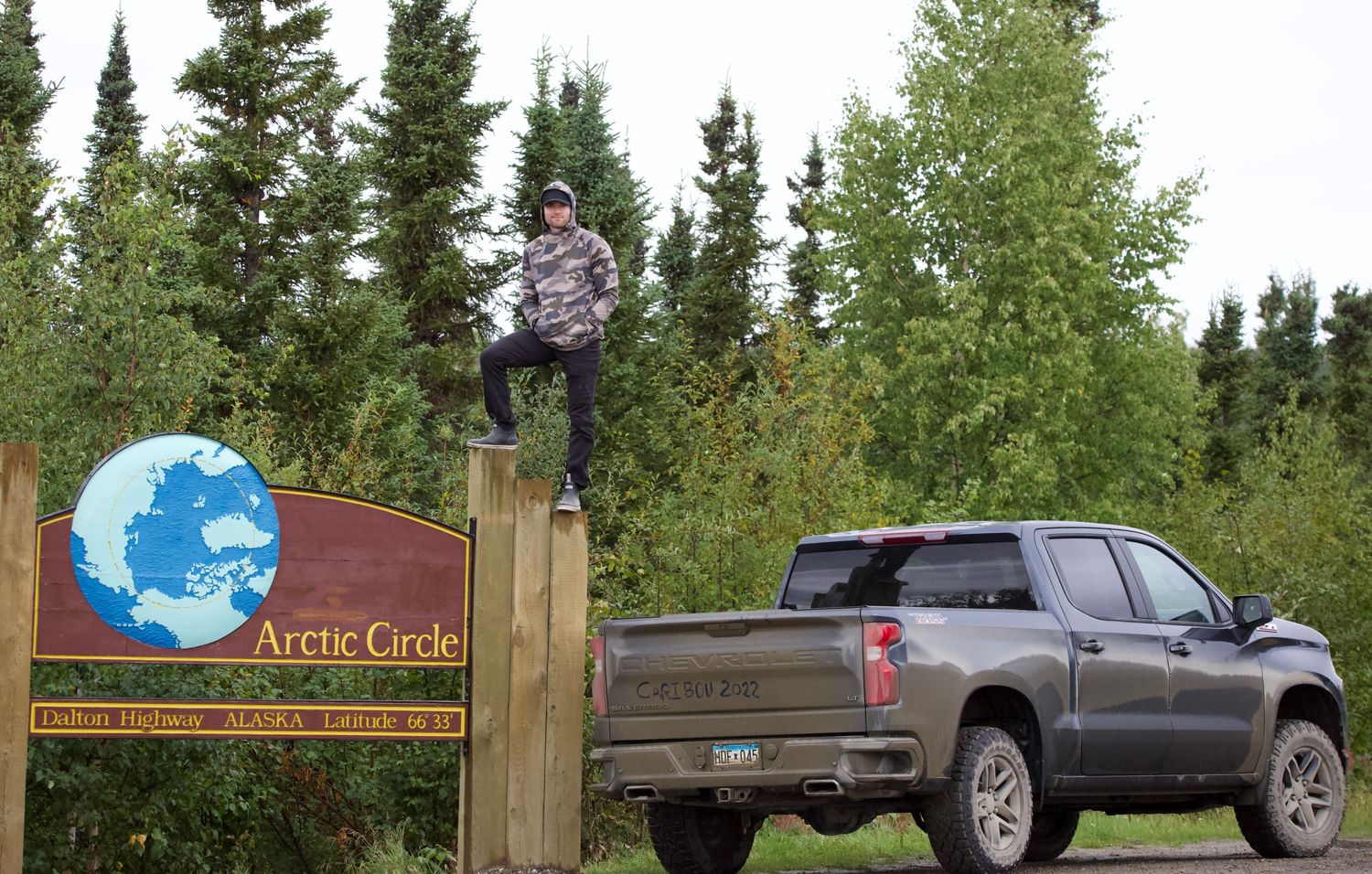
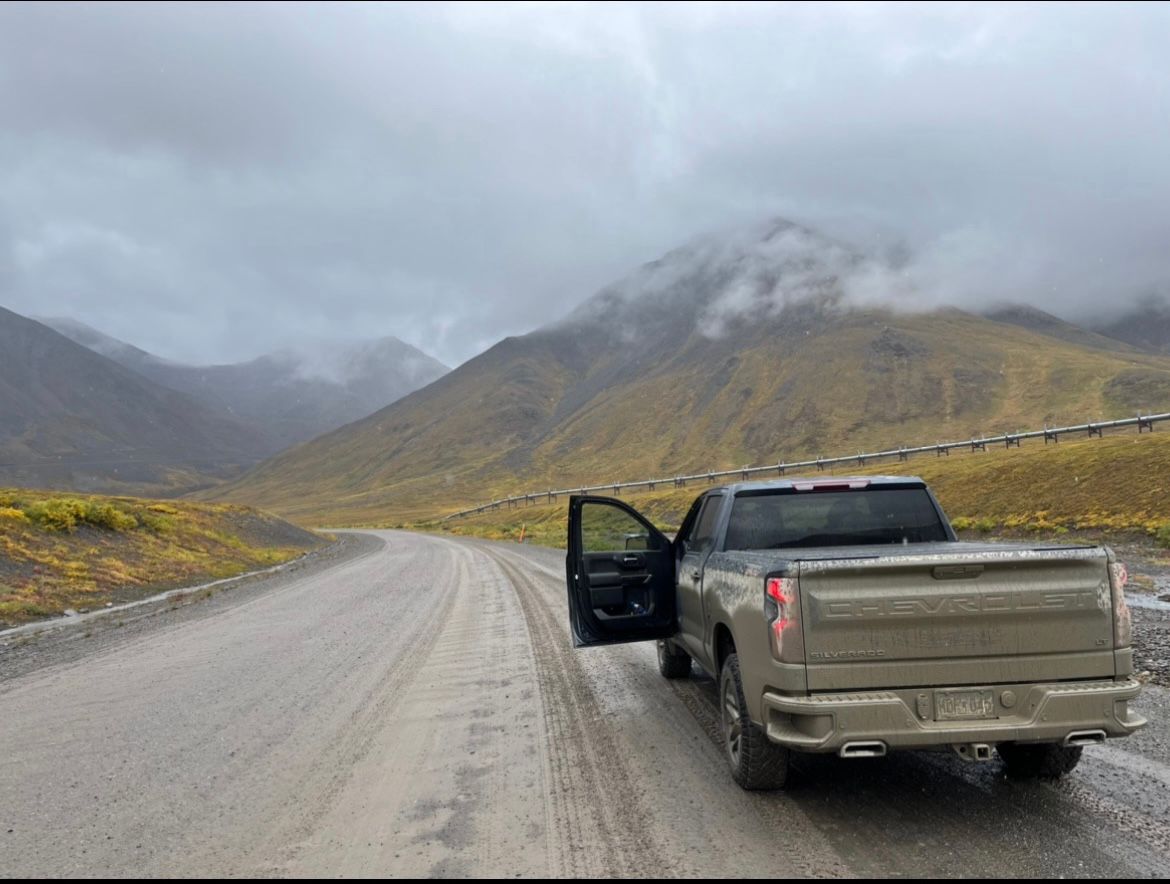
The Dalton Highway (also referred to as the 'Haul Road') hunt for caribou is known as the ultimate 'Do It Yourself' hunt in northern Alaska. This highway had been originally built for the purpose of construction and maintenance for the Trans-Alaska Pipeline, which snakes through the Canadian wilderness from the port of Valdez to the oil community of Deadhorse found along Prudhoe Bay, a small town that resides along the Arctic Ocean. This highway stretches across some of the most beautiful and rogue country of Alaska for more than 400 miles with limited access to services such as gas stations, convenience stores, and hotels. Max and I traveled along this highway with two five-gallon gas cans, spare tires, all our hunting and camping gear, and a tool kit as the Haul Road is not only the most remote highways in the world, but also one of the roughest. For example, the term 'highway' might be generous, as the road is 75% gravel and only 25% paved with potholes large enough to bend an axel on even the toughest of trucks. To reach our hunting destination, we needed to drive north of the Brooks Range, one of four major mountain ranges in Alaska. However, we know that the drive would be the easy part. Once we arrived, we were required to hike five miles off the road before we could even think about hunting caribou. As the pipeline runs along the highway, the State of Alaska requires that all rifle hunters hunt outside of a 5-mile corridor on either side of the pipeline, to prevent a hunter from damaging the pipeline itself with a bullet that missed its mark. While rifle hunters are required to trek across the tundra in order to begin hunting, bow hunters are allowed the luxury of hunting within the 5-mile corridor. There were many moments where I certainly wished I had had a bow with me.
Any person might wonder, "A five-mile hike - What's the big deal?". However, this isn't a typical 5-mile hike on a paved path. Looking back, I would gladly take the trail marathon up and down hills before voluntarily hiking through such terrain again. The ground of the tundra is the most unforgiving terrain that a person can imagine. I would have gladly traded hiking on the tundra for a hike up any mountain. We had encountered a couple of bow hunters before we set out on our journey, and I'll never forget their words. "Wait, you didn't bring a bow? I would turn around and come back next year. You might be able to get out to the 5-mile marker but making the trip back with a caribou is another story." The best way to describe the ground in this country is to think about it like this - You are walking on endless fields of squishy basketballs that will move in any direction when your foot hits them. Every single step had us swaying in a different direction. As described by a sheep hunter who religiously hikes into some of the steepest most dangerous mountain terrain within the Chugach Mountains of Alaska, "I would rather hike 50 miles into sheep country than suffer through another 5-mile hike in the tussocks of the tundra". Naturally, this only made Max and I want to conquer such a feat even more.
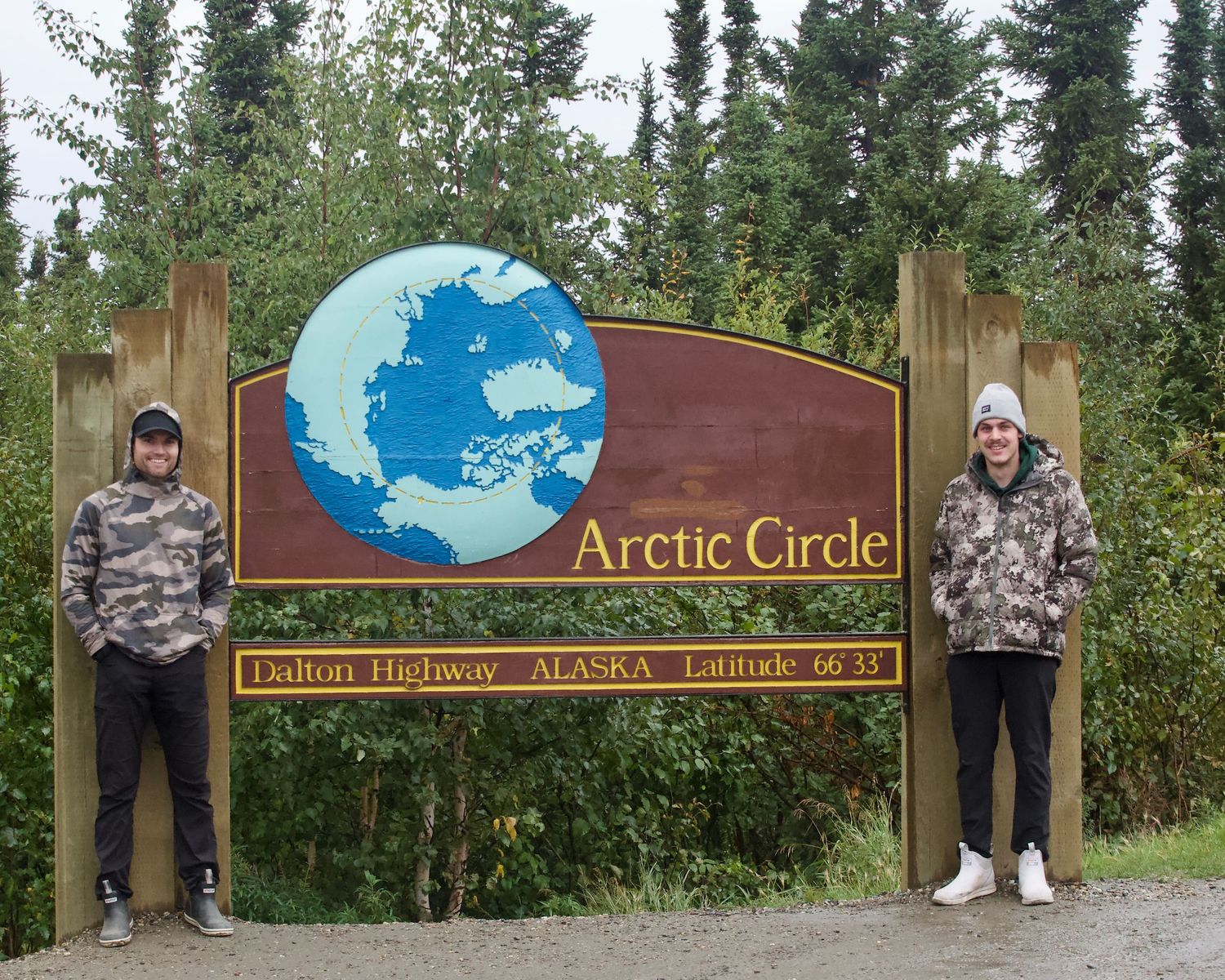
It was a bitter-sweet departure from Girdwood Alaska, of which we had lived for most of the summer and considered to be a ‘home away from home’. We spent the entire first day of our adventure driving from Anchorage to Fairbanks and then onto the beginning of the Haul Road. That first night, we pitched our tents along the highway with just the noise of semi-trucks passing by in route to the end of the Haul Road in Deadhorse, Alaska. The next day, we continued our journey into the Arctic Circle. We drove through the barren mountains of the Brooks Range and made the rest of our trip north to a place about 10 miles from where we had planned to begin our hunt.
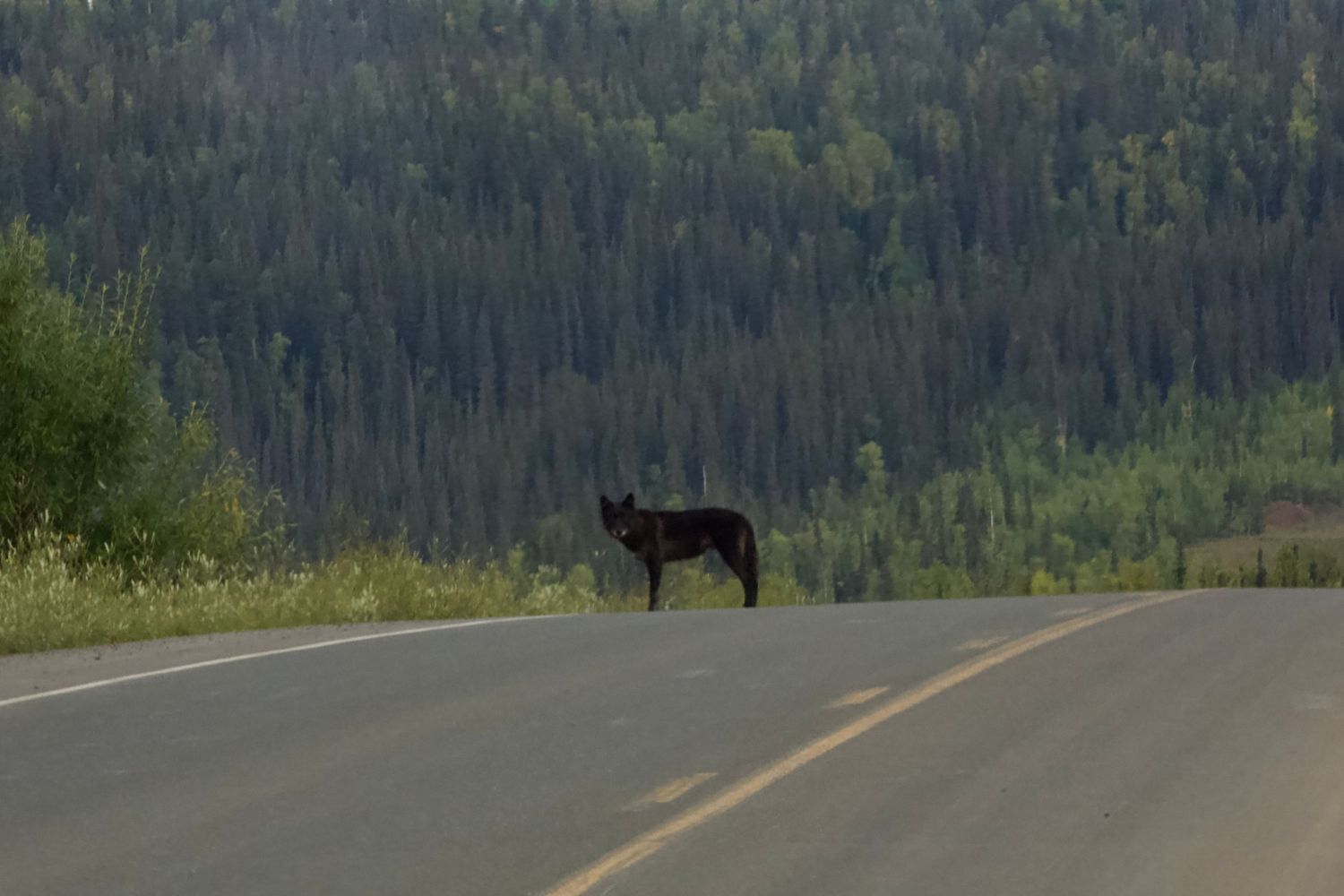
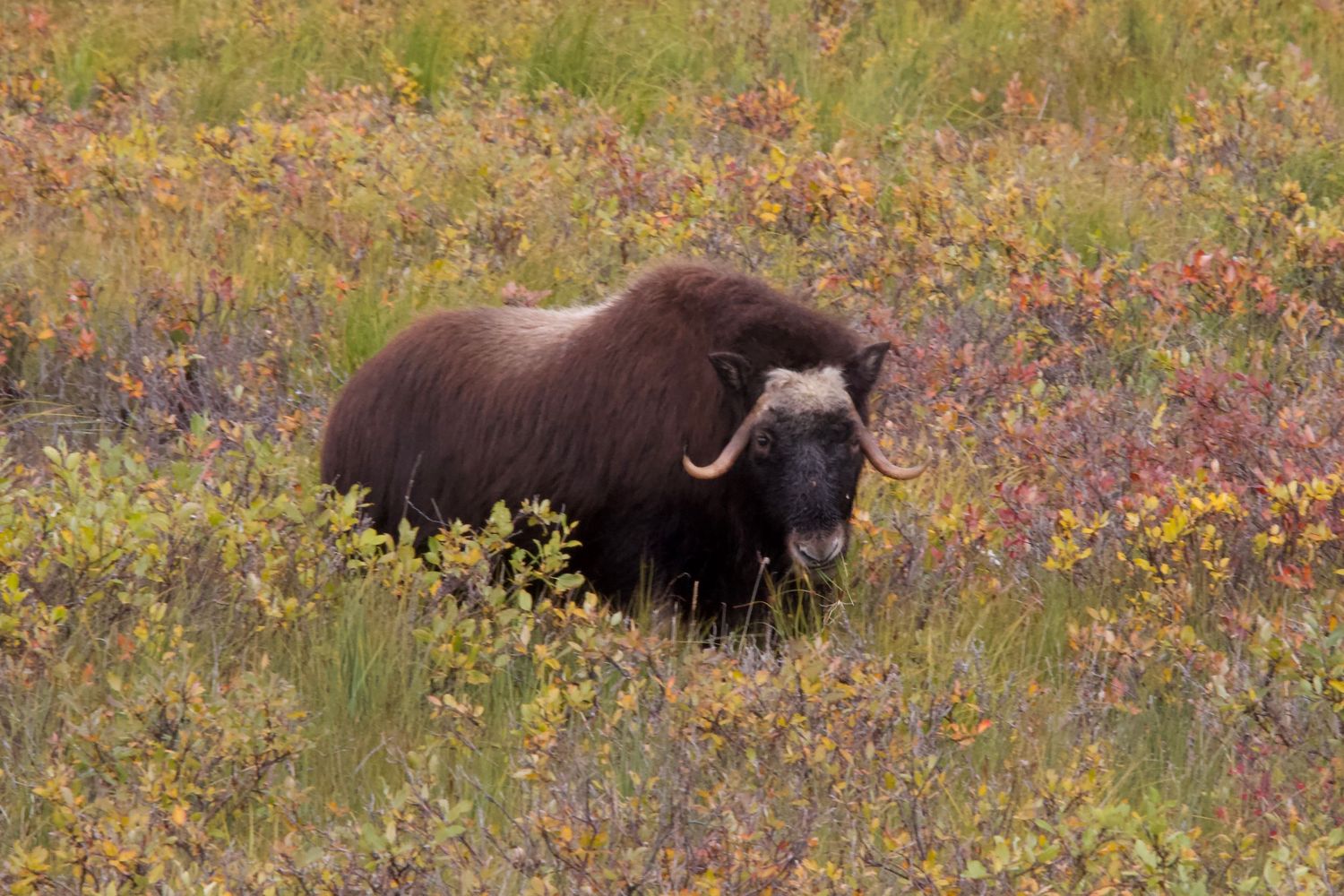
After traveling roughly 800 miles from Anchorage, Max and I found ourselves about 60 miles south of Deadhorse, Alaska; Alaska’s northern-most town found along the Arctic Ocean. In every direction that we looked, we gazed upon wide-open tundra for what seemed to be hundreds of miles. It felt a little bit like home (Southwest Minnesota), but on a much larger scale. Replace the timid caribou along the road with white tail deer, the musk ox with a herd of cattle, the wolves we encountered with coyotes, and we were basically on the edge of our small hometown of Marshall, Minnesota. All jokes aside, this was the vastest country I’ve ever seen, and I felt so insignificant and fragile. At first glance, the landscape appeared to be treeless, rolling hills for as far as the naked eye could see. As we gazed out farther into the south in the direction from which we had come, the mountains of the Alaskan Brooks Range jut out into existence, one of the most beautiful yet mysterious mountain ranges we'd ever experienced. There was no sign of civilization in any direction, and we didn’t have any phone-service since entering the Brooks Range earlier that day. Without wasting any time, we began glassing the tussock-filled hills along the road in search of caribou. We spotted various groups traveling along the landscape in the distance, appearing to look like ants on a hill. Although there were caribou in sight, we noticed that they never stopped moving. They’d pause for a slight second or two, only to precede effortlessly trotting across the tundra. At this moment, we realized that while we had spent so much time and effort preparing for this hunt, the challenge of successfully taking an animal had only just begun. We had spent all summer preparing for a caribou hunt along the Haul Road and had traveled over 3,500 miles from Minnesota to northern Alaska to put ourselves in a position to experience one of the most fantastic yet physically and mentally challenging places in the world; the tundra of the Alaskan North Slope.
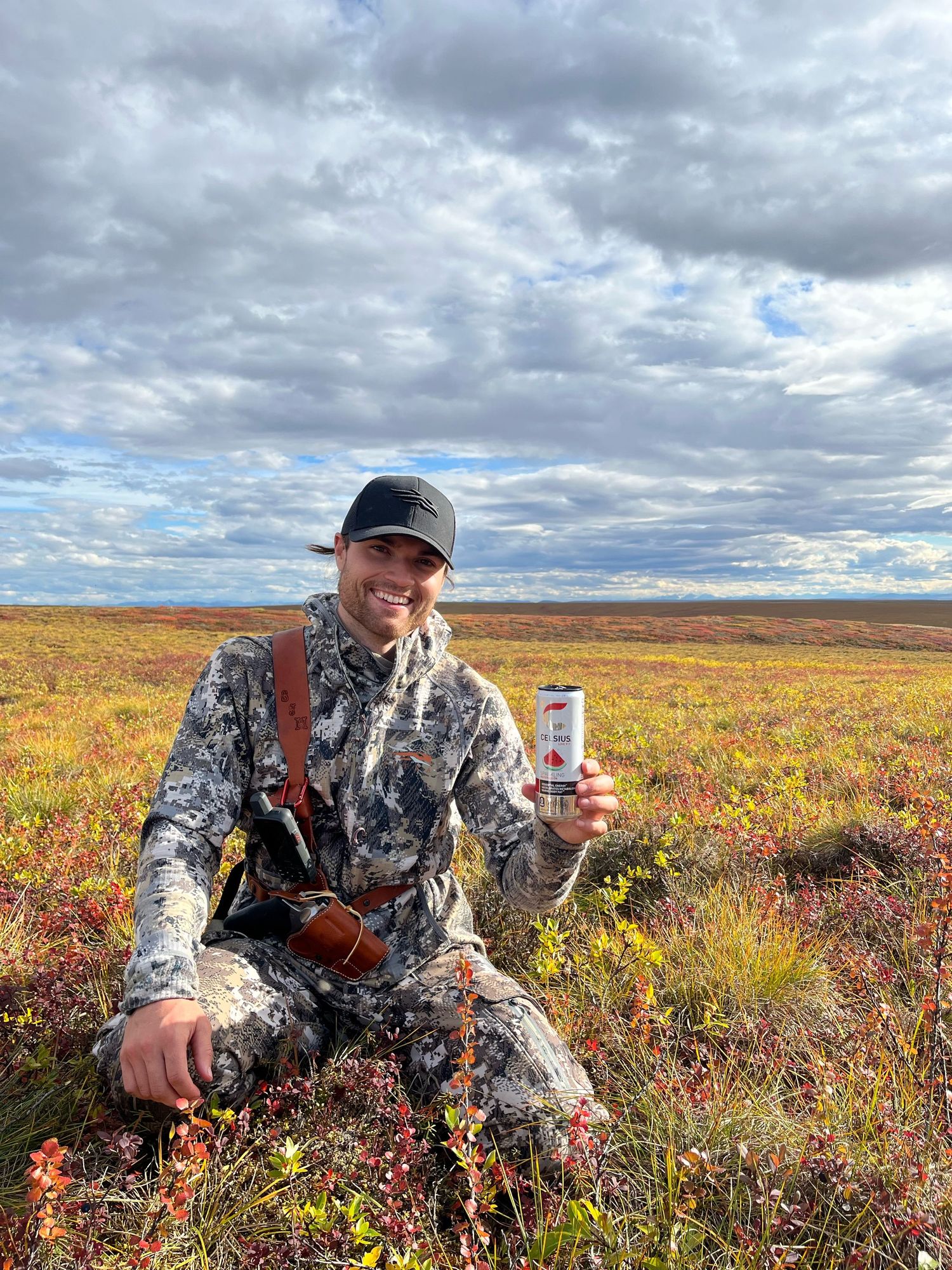
After spending our second night along the highway, we woke up to a cold-front and freezing rain. However, as we had seen well over one hundred caribou the day before along the highway, we were excited to get out and officially begin our hike into the tundra. We drove to our access spot and diligently worked through our gear checklist. We knew that we'd need everything from our sleeping bags, tent, food, water, to what I liked to call the ‘lifeline’ items - my Alaskan Super Redhawk .44 Magnum as well as the GPS Garmin 66i that would help us navigate the wide-open country. Before heading out into the tundra, we both snarfed down a quick breakfast consisting of peanut butter banana sandwiches (a meal we had been eating roughly twice a day the last three days). We then double checked all our gear, locked the truck, and began hiking with about 40 lb. packs on each of our backs.
Just as we had hiked for about two miles, a thick fog had surrounded us. We had no sense of direction without the assistance of the GPS Garmin hand-held, our feet were soaked from crossing multiple creeks, and we were completely overwhelmed by the exhausting hiking across the tussocks which felt like we were walking on thousands of basketballs that moved in an unpredictable direction with every step. We had only traveled two miles and it took us about two hours of exhausting effort. As if the hiking wasn't challenging enough, we realized that we made a grave mistake. We were packing out with just four freeze dried meals each, four CLIF bars each, and one liter of water each. With limited supplies, we figured that we could make it a couple of days before we'd need to return to our vehicle. And, of course, this depended on us finding water along the way. Fortunately, we both had water filters, but it was a risk that we had to take not knowing when we would run into the next legitimate water source. While the Garmin maps were helpful, they didn't capture any streams in the direction that we were traveling, which made us a little bit nervous about continuing forward. And by a little nervous, I mean very nervous. I had already slugged half of my water bottle, and we weren’t even halfway to the marker of where we could begin our hunt. Given these circumstances, doubt began to creep into our minds. We legitimately contemplated turning around and forgetting about this adventure altogether. Max and I had greatly underestimated what we would need for food and water, and at that moment we realized that we were in over our heads. Even though we knew we were taking a risk, we knew that we had to keep going. At the very worst, I knew we would have enough energy to get us back to the truck empty-handed the next day. Additionally, we continued to see caribou in the fog in the direction that we were heading which gave us the little hope that we needed to keep moving. If we could just make it out to 5 miles, we'd have the opportunity to turn a dream into a reality and hunt caribou in the most remote wilderness we'd ever experienced.
After a grueling five hours of hiking through the tussocks, we had finally reached the 5-mile marker. The hunt had just begun. We both ate a CLIF bar and began to glass the open tundra before us. We were resting on a hillside that overlooked the tundra for what seemed to be miles and miles. We saw caribou, but nothing worth pursuing. While Max had fallen asleep in between a couple of tussocks, I continued to scan the landscape through my binoculars until I saw three hunters about a mile away heading in our direction. "Max, there's three hunters heading straight at us." I tried to get their attention to ensure that they were aware of our location. Max then suggested that we hike over the next ridge to beat them to the next overlook. We began to move over the next hill, and instantly saw caribou. We checked our distance from the road to ensure that we were still outside of the 5-mile corridor, and sure enough we were approximately 5.5 miles away from the closest portion of the road. A lone caribou bull worked right around us until he was between us and the other hunters we had spotted. He was a beautiful bull, but too dangerous to shoot as we would have been aiming in the direction of the other hunters. We passed on this bull. A few moments later, we spotted a group of about five caribou about a half of a mile away that were heading directly towards us. Max suggested that we maintain our same location and wait for them to come our way. I concurred, and Max started taking out the range finder while I dug out my shooting sticks and Tikka T-3 7mm bolt-action rifle from my Stone Glacier backpack.
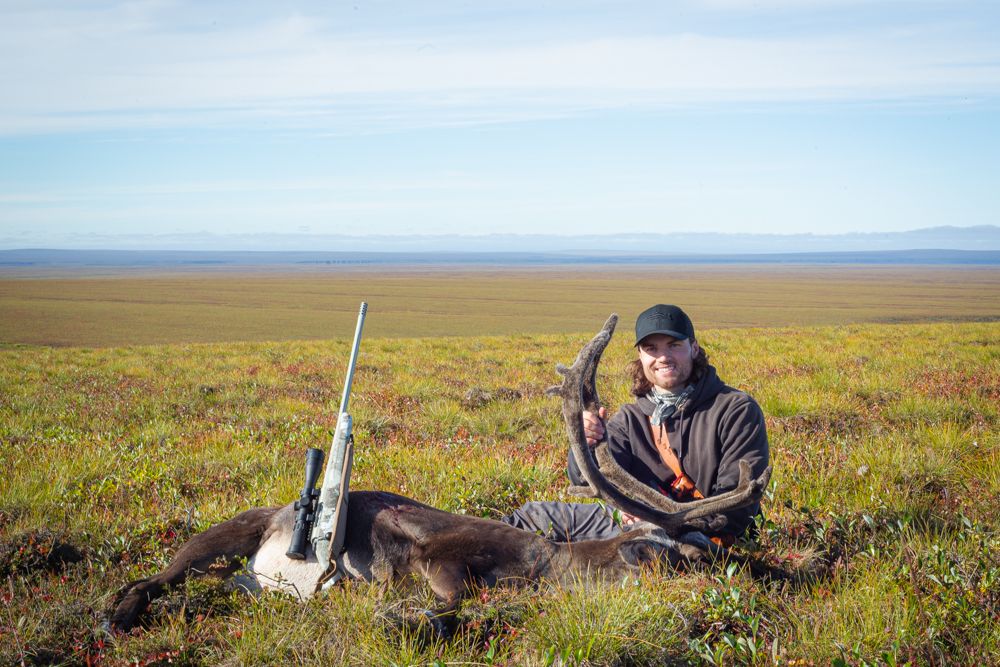
Max was looking at the group of caribou as they were about 200 yards out from where we were and mentioned that the first caribou was a nice bull. I looked through my binoculars and agreed with him. I started setting up for a shot. In the meantime, the caribou continued moving closer and closer. While we had been getting set up for a shot, the front bull caribou had worked his way to the back of the group. They had worked their way to the right of our position down the hill that we were on and were at about 80 yards from our location. I had situated my rifle on my shooting sticks and positioned myself between a couple of tussocks, ready to take a shot. My heart began to race. I had thought about this moment for what seemed like a lifetime. As I began to line up the crosshairs of my scope over the caribou's vitals, Max whispered, "Hey, you have a mosquito on your nose." I start to chuckle, as amidst all of the excitement happening around us, Max was focused on me. "Thanks", I whispered shaking my head in response as I looked through my scope, a little more relaxed this time. The bull paused, and I lined up my cross hairs over his heart. I then pulled the trigger. Max immediately started yelling, "He's going down, he's going down, you hit him!" Within a matter of seconds, the bull dropped and didn't travel more than 5 yards from where the bullet had pierced his side. In celebration, Max and I fist bumped and replayed the last several minutes probably talking much louder than we thought as we were both deafened by the loud crack from the rifle just moments before.
After some time had passed, we approached the caribou in complete awe. We're both addicted to wildlife, which is what had led us to spending a summer in Alaska in the first place. I've always found the act of killing in hunting to be difficult. I don't think any hunter should take it lightly. Rather, I've always found the adventure of the hunt, traveling into country that you elsewise wouldn't have, as well as the reward of sharing wild game meat with friends and family to make it such an incredible experience. We began field dressing the animal, which took us about 4 hours. Alaska regulations require that every usable part of an animal must be utilized by the hunter out of respect for the animal. This includes taking all of the meat, the hide, and lastly the antlers. After a day of hiking through brutal terrain and harvesting an animal, we were exhausted. We set up camp and spent the night in the tundra, with the meat of the caribou about 100 yards west of our tent. We knew we needed a little bit of rest before two full days of packing out meat and our camping gear.
Going into the hunt, we knew that we had so much to learn and that there would be various unforeseen struggles that we'd run into along the way. To put things into perspective, I had started bowhunting in 2020 after about 10 years of not hunting at all. Over the course of 2020 and 2021, I had killed one white-tail deer that I thought was a doe, which turned out to be a yearling buck. It was extremely disappointing for many reasons, and certainly humbling. I realized that I had (and still have) so much to learn before I consider myself to be a hunter. On the other hand, Max had never hunted anything larger than a pheasant, and our caribou hunt was the first big-game hunt he had ever been on. We had told many people that we were planning to hunt caribou in Alaska - based on our hunting experience, I think that most people agreed that we were way in over our heads and probably thought that there was no way that we'd be successful. Max and I both had our doubts as well, but we knew that regardless of whether we were successful or not, this would be both a challenging and amazing adventure.
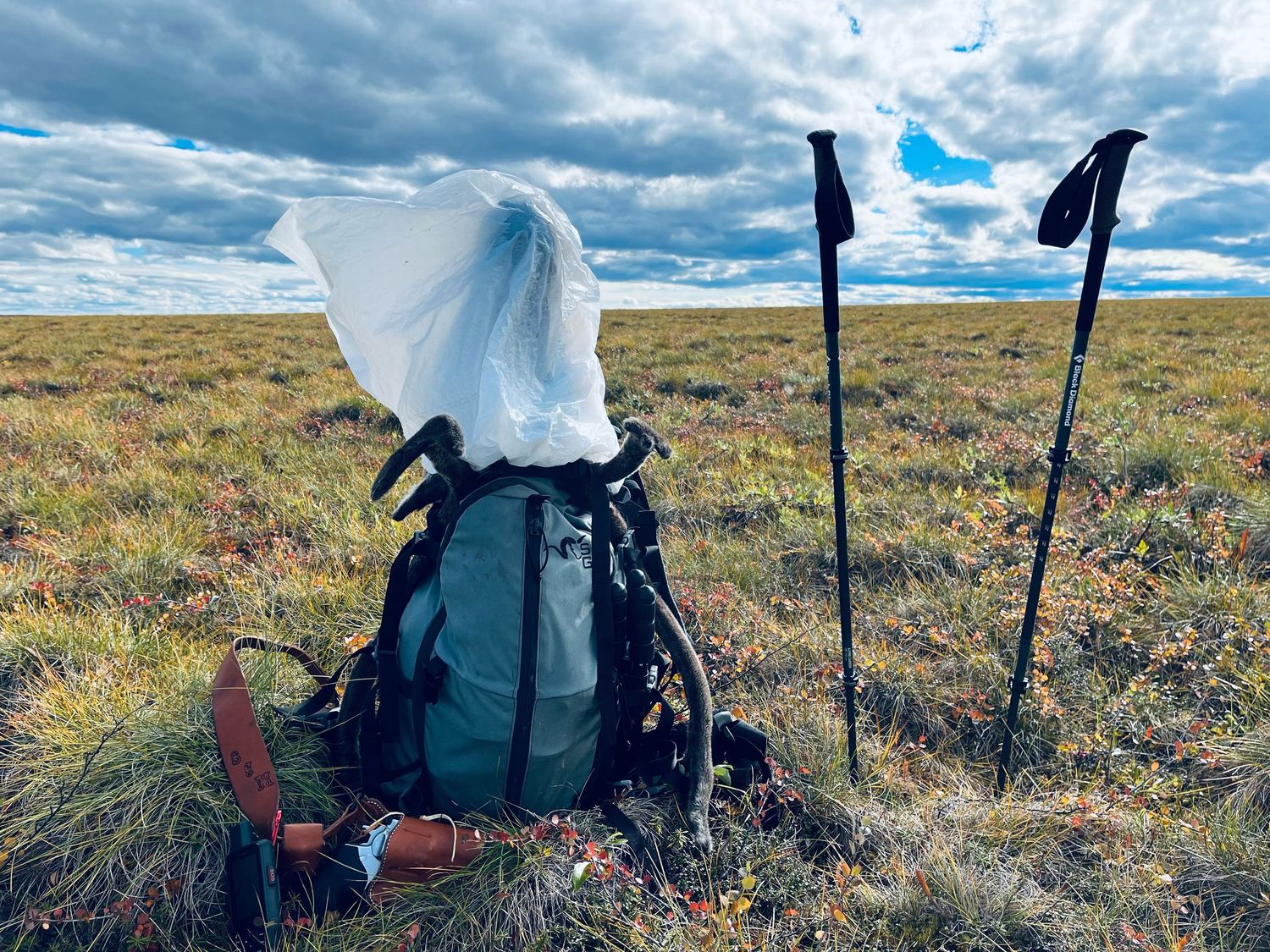
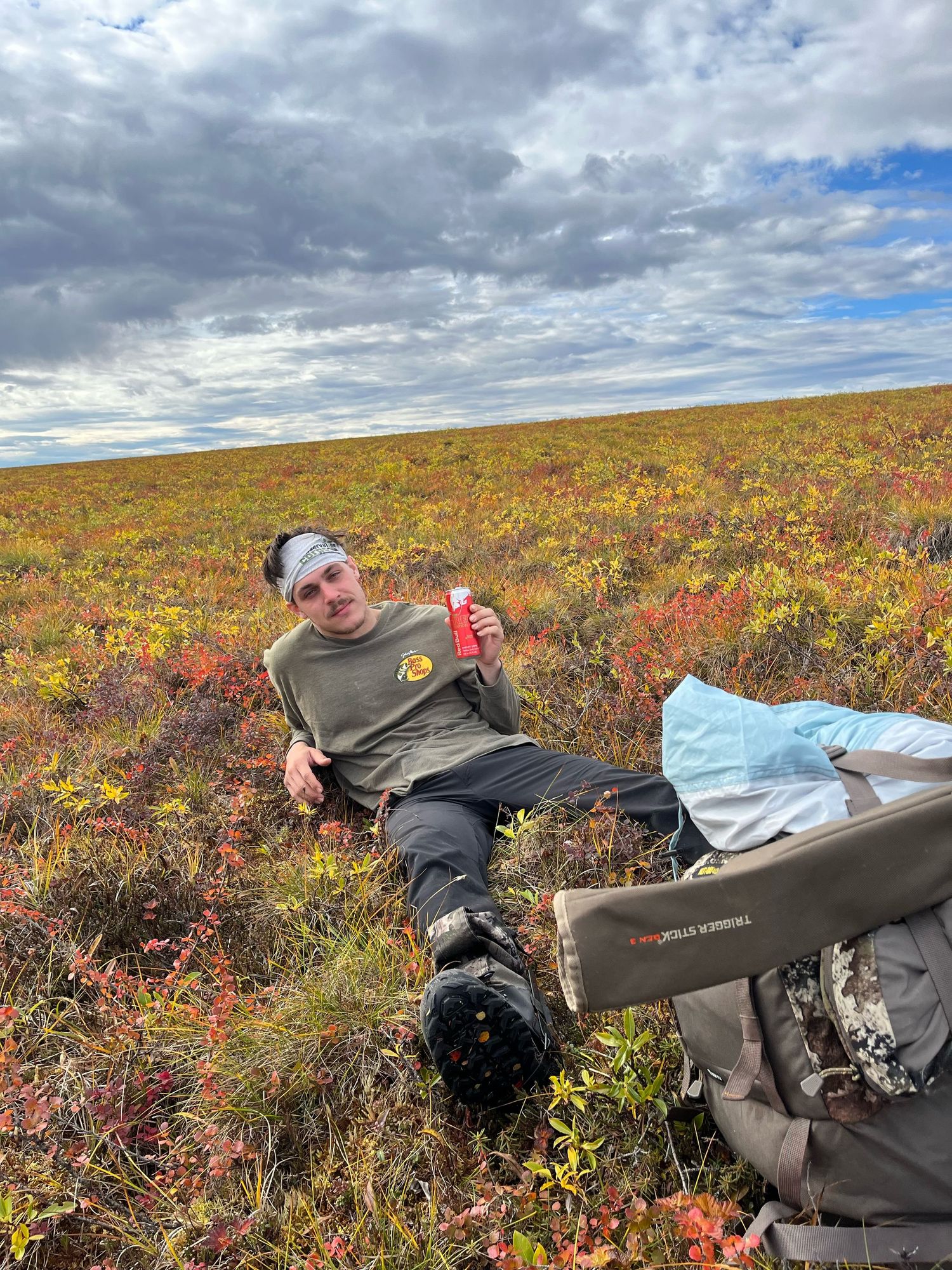
We spent the next two days packing out the meat of the caribou and the gear we brought with us. The first day, we loaded up our packs with around 80 lb. of meat, hide, and limited gear. It ended up taking us about 9 hours to travel 5 miles. This was by far the hardest physical challenge I've ever experienced. We spent the evening eating everything from hamburgers, scrambled eggs, to caribou tenderloin medallions that we fried up right alongside the road by the truck. The next morning, we hiked the span of 5 miles yet again, this time with empty packs. As we had more camping gear and meat than we could carry in one trip, we were forced to make two trips. This time, we packed up the remainder of our camping gear along with the caribou skull and antlers that we had left in the tundra the night before. Thanks to the Garmin GPS, we easily found the spot where we had left all our gear. After locating our gear and confirming that we weren’t missing anything, we loaded up our packs and began our last stretch of the 5-mile corridor across the tundra which turned out to be the most difficult span as expected, but also one of the most special moments of our entire summer as it marked out last hike in the Alaskan wilderness - tired, exhausted, and genuinely happy. For those that have never packed out an animal on their backs - this was one of the hardest things I had ever experienced; but as each day passes, the memory of this trip, endured with a friend, becomes more special.
After organizing our gear and loading all the meat into coolers, we began a 65-hour drive from the Arctic Circle to Minnesota. We crossed the border of Alaska into the Yukon, then cut across through British Columbia, Alberta, Saskatchewan, and then into the United States through North Dakota to then arrive back in Minnesota. We had coolers full of caribou, salmon, and all our belongings that we had with us. A 65-hour drive with limited internet access allows a person a lot of time to think, and if I'm being honest, I spent most of that drive thinking about bow hunting big white-tail bucks on my uncle’s farm as well as figuring out how we were going to get back to Alaska to embark on yet another adventure.
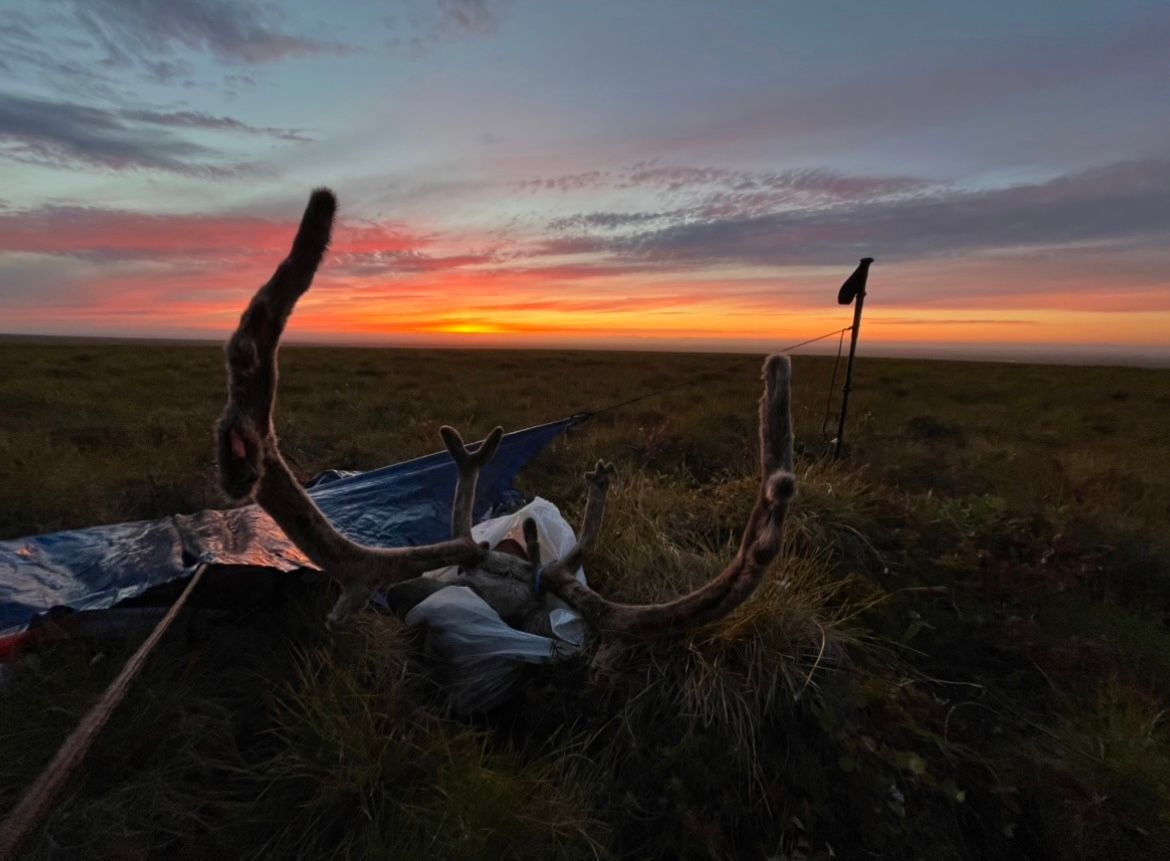
There are so many people that we must thank, including friends that taught me how to use and shoot my handgun, rifle, select the right gear, and inspired us to go above and beyond what we thought to be our limits. Of course, there were many Alaskan friends that taught us along the way as well. I cannot express how thankful we were to run into the right people during our time in Alaska that made this hunt possible. Finally, I am so thankful for the people in my life that I admire that have exposed me to the challenge, adventure, and happiness that can be found in the outdoors, ranging from both southwest Minnesota to 'The Last Frontier' in Alaska.
Until next time, AK.
-The Sunrise Boys
Written by Sam Marshall
Photos by Maxwell Roelfsema (Miles Action Photography)